

Better posture is not about looking confident, it is about helping your spine move, breathe, and recover the way it was designed to.
If you live in Pasadena, Texas, there is a decent chance your day asks a lot of your body. Maybe you work long shifts on your feet, you lift and carry, you twist in tight spaces, or you sit at a desk staring at screens for hours. Either way, posture quietly shapes how you feel. As a Chiropractor, we see it constantly: small, repeated position habits that turn into neck tension, low back pain, headaches, and that worn-down feeling that makes you move a little less each month.
Over 35 million Americans visit a chiropractor every year for musculoskeletal issues, and back pain is still the leading reason people seek care. That is not surprising when more than 70 percent of people experience back pain at some point. What surprises many patients is how often posture is the driver: forward head position, rounded shoulders, ribcage stiffness, or a pelvis that never really feels level. It adds up, slowly.
We focus on helping you connect the dots between posture and pain, then we build a plan that makes sense in real life. No lectures, no unrealistic routines. Just clear steps: restore spinal motion, reduce irritation, strengthen what is weak, and adjust the daily habits that keep pulling you back into the same patterns.
Why posture causes pain more often than you think
Posture is not just standing up straight. It is how your joints stack, how your muscles share load, and how your nervous system interprets stress. When posture breaks down, some tissues become overworked while others become underused. That mismatch is where chronic pain tends to settle in.
A few examples we commonly find during posture checks:
• Forward head posture can overload the neck and upper back, leading to tight traps, headaches, and shoulder irritation.
• Rounded shoulders can reduce shoulder blade stability, which changes how you reach, lift, or press.
• A stiff mid-back can force the neck and low back to move too much, so the places you already feel discomfort do even more work.
• An anterior pelvic tilt or a flattened low back can both strain the lumbar region in different ways, especially during lifting or prolonged sitting.
None of this means you did something wrong. It usually means your body adapted to your work, your commute, your phone, your past injuries, and your stress level. We treat posture like a map that helps us choose the right starting point.
The Pasadena posture problem: industrial strain and desk strain
Pasadena sits right in the Greater Houston work ecosystem, and that matters. We see two big posture patterns here, sometimes in the same person.
Refinery, port, and manufacturing demands
Repetitive tasks, heavy lifting, pulling hoses, climbing, and bracing in awkward positions can create a protective posture. You might not notice it day to day, but your body starts to guard: shoulders slightly elevated, ribs stiff, hips tight, and a low back that never fully relaxes. Over time, that guarding can become your default posture.
Screen and seated work demands
Desk posture is a different type of stress. You are not lifting heavy loads, but you are holding the same position for hours. The head drifts forward, shoulders round, the upper back stiffens, and the hip flexors shorten. The pain often shows up as a nagging neck ache, mid-back tightness, low back stiffness when you stand, or a shoulder that clicks and pinches.
In both cases, posture is not a character flaw. It is biomechanics plus repetition. Our job is to help you change the input so your body can change the output.
Signs your posture is costing you more than comfort
Pain is one signal, but it is not the only one. Posture-related strain often shows up as performance loss first, then discomfort later. If any of these feel familiar, a posture evaluation is worth it:
• You feel stiff when you first stand up, especially after driving or sitting
• You avoid turning your head fully when backing up or checking blind spots
• Your shoulders fatigue quickly during lifting, reaching, or overhead work
• You get headaches that seem to start in the neck or base of the skull
• You feel one-sided tightness in the hip or low back that keeps returning
• Your breathing feels shallow when you are stressed or hunched forward
The earlier we catch these patterns, the easier it is to reverse them. Waiting until the pain is loud usually means you have been compensating for a while.
How we evaluate posture and function in our office
We do not guess. Posture correction works best when it is based on what your body is actually doing, not what a generic checklist says you should do.
A typical first visit often includes a mix of:
Posture and movement screening
We look at head position, shoulder symmetry, spinal curves, pelvic alignment, and weight shift. Then we watch how you move: bending, rotating, reaching, and walking. Sometimes the issue is obvious. Sometimes it is subtle, like one hip not extending well, forcing your low back to overwork.
Spinal and joint assessment
We assess areas that are restricted, irritated, or compensating. Motion loss matters because when one segment stops moving well, nearby areas often move too much, and that is where strain develops.
A plan you can actually follow
If posture is the main driver, our plan usually blends adjustments, targeted exercises, and lifestyle education. We keep it practical. If you work long shifts, we account for that. If you sit all day, we build micro-break strategies that do not require a full gym routine.
Chiropractic care for posture: what changes and why it matters
Chiropractic Care in Pasadena, TX is often associated with back pain, and yes, we help with that. But posture work goes beyond symptom relief. We are aiming for better mechanics so your body stops needing to complain all the time.
Clinical guidelines increasingly favor spinal manipulative therapy for the vast majority of low back pain cases and for neck pain as well, because improving joint motion and reducing sensitivity often unlocks function quickly. Many patients feel a shift in comfort within one to two weeks, especially if tension and restriction are a big part of the problem. Structural posture change usually takes longer, more like three to six months, because muscles and habits need time to catch up.
We also emphasize safety. Chiropractic care is considered highly safe overall, with serious adverse events reported as extremely rare, around 1 in 2 million manipulations. That matters if you work in physically demanding environments and you need care you can trust, not something that leaves you feeling fragile.
What we do to help you correct posture, not just chase pain
When someone comes in saying, My posture is terrible, we do not respond with a one-size-fits-all routine. We build a posture correction strategy that fits your life and your body.
Here is what our posture-focused care commonly includes:
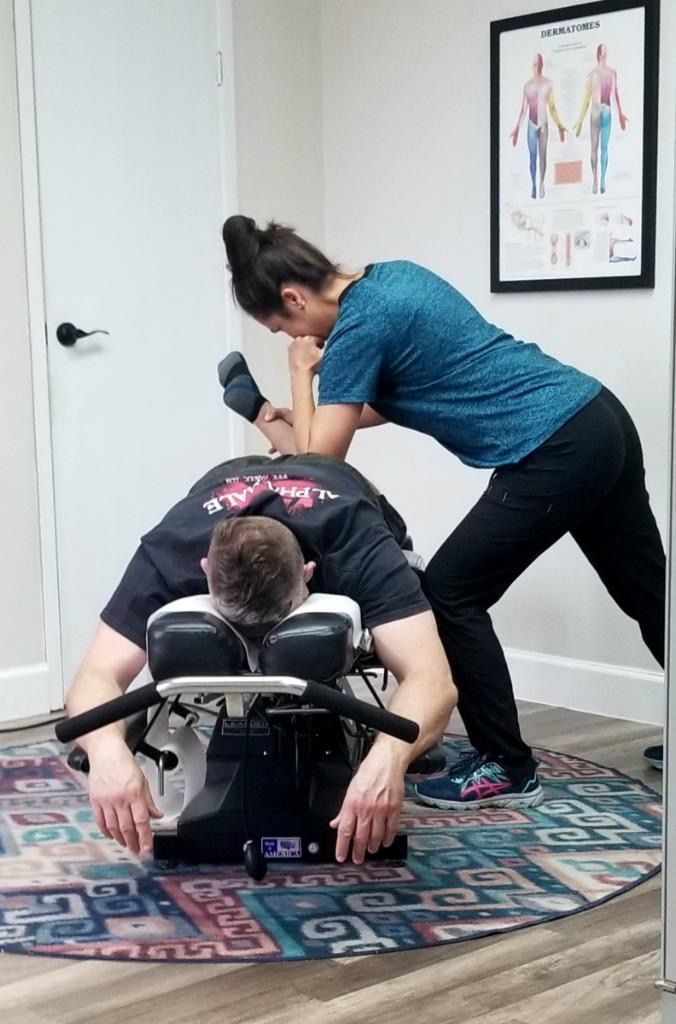
• Spinal adjustments to restore motion in restricted segments, reduce joint irritation, and improve movement quality
• Soft tissue support when needed to address tight areas that keep pulling you into poor posture
• Targeted corrective exercises to strengthen underused muscles and retrain positioning
• Ergonomic and lifestyle coaching so your desk, car, or job tasks stop reinforcing the same strain
• Progress tracking so you can see what is improving, not just hope it is
That last point matters more than people expect. When you can measure changes, even small ones, you stay consistent. And consistency is where posture actually changes.
A simple posture reset you can start today
We like giving patients something they can do immediately, even before the next visit, because it builds momentum. This quick reset is not fancy, but it is effective when done regularly.
1. Stand with your feet hip-width apart and soften your knees slightly
2. Take a slow breath in through your nose, expanding your ribs sideways
3. As you exhale, gently tuck your chin back (not down) to stack your head over your shoulders
4. Roll your shoulders up, back, and down, then let your arms hang naturally
5. Do two more slow breaths while keeping ribs stacked over your pelvis
6. Walk for 30 to 60 seconds and notice if your stride feels smoother
If this feels difficult, that is useful information, not a failure. It usually means your body has been living in one posture so long that neutral feels unfamiliar.
FAQs we hear from Pasadena patients about posture and chiropractic
Can chiropractic care actually fix my posture, or just the pain
Yes, posture can improve when we address both the spine and the supporting muscles. Adjustments help restore alignment and motion, and corrective exercises help you hold those changes. If we only chase pain, posture often slides back.
How long does posture correction take
Many people notice pain reduction within one to two weeks, especially if tightness and joint restriction are prominent. More lasting postural change commonly takes three to six months of consistent care and home work, depending on your starting point and your daily demands.
Is it safe if I work an industrial job
In general, yes. Chiropractic is a conservative, drug-free approach, and safety data shows serious complications are very rare. We also tailor care to your workload so you can keep doing your job with more confidence in your movement.
Will I need medication during care
Our approach is drug-free. Our goal is to reduce mechanical stress and improve function so your body relies less on temporary symptom management.
Ready to take the next step
The most frustrating thing about posture-related pain is how normal it can feel, until it suddenly is not. If your neck, shoulders, or low back keep getting your attention, posture is worth treating as a root cause, not a side note. With the right combination of adjustments, exercise, and habit changes, your body can feel steadier and more resilient in daily life.
When you are ready, we can guide that process with a clear plan at Champion Chiropractic of Pasadena. We keep the focus on what matters: measurable improvement, practical strategies, and Chiropractic Care in Pasadena, TX that supports how you actually live and work in this area.
Don't let pain slow you down. Schedule an evaluation at Champion Chiropractic of Pasadena and start your recovery journey.