

When your nervous system stays stuck in go mode, even small aches can feel like a heavy, daily weight.
Stress is not just a mental load you carry around in your head. It shows up in your shoulders that will not drop, your jaw that clenches without permission, and that mid-back tightness that seems to appear the moment you sit down at work. As a Chiropractor, we see how often tension becomes physical, and how quickly it can ripple into sleep issues, headaches, and a constant sense of being on edge.
In Pasadena, daily stressors can look pretty specific. Long shifts, repetitive tasks, industrial work demands, long drives, and the aftereffects of car accidents are all common here, and each one can push your body into a protective posture. When your spine and surrounding tissues stay “guarded” for too long, the nervous system has a harder time switching into rest-and-recover mode.
That is where chiropractic care fits in. Our goal is not to tell you to “relax” and send you on your way. We focus on restoring healthy motion, reducing nerve irritation, and helping your body move out of that tense, braced state so you can feel like yourself again.
Stress, Tension, and the Spine: What Is Actually Happening?
Stress and tension usually create a predictable pattern in the body: shallow breathing, elevated shoulders, forward head posture, and tight hip flexors. Over time, those patterns can change the way your joints move and how muscles fire. When joints stop moving well, nearby muscles often work harder to compensate, and that can turn into persistent tightness.
Your spine matters here because it houses and protects your spinal cord and influences how nerves communicate with the rest of your body. When there is joint restriction or misalignment, you can end up with irritated nerve pathways and altered mechanics. You might feel it as pain, but you might also feel it as fatigue, poor sleep quality, or even a low-grade sense of overwhelm that is hard to explain.
A Chiropractor looks for those patterns and focuses on correcting them, rather than chasing symptoms one at a time. In our clinic, we treat stress and tension like a whole-body problem, because that is usually what it becomes.
How Chiropractic Adjustments Support Calm and Recovery
Chiropractic adjustments are designed to improve joint motion and alignment, especially in the spine. When the spine is moving better, you usually see less muscle guarding and less pressure on sensitive structures. That “letting go” is not just physical, it is neurological.
Many patients notice that after an adjustment, breathing feels easier and posture feels less forced. There is a reason for that. Spinal adjustments can help stimulate the parasympathetic nervous system, which supports rest, digestion, and recovery. That shift matters when your body has been living in fight-or-flight for weeks or months.
Stress chemistry plays a role, too. When your body is constantly stressed, cortisol can remain elevated, and you may feel wired but tired. As the nervous system settles down and mechanical irritation decreases, many people report feeling more relaxed, clearer, and less reactive. We cannot promise a single adjustment will erase life stress, but we can help your body stop amplifying it.
Signs Your Stress Has Turned Into a Musculoskeletal Problem
Some stress symptoms are obvious, like neck tightness or tension headaches. Others are sneakier and show up as “normal” day-to-day discomfort you just tolerate. If you recognize yourself in a few of these, it may be time to address the physical side of stress.
Here are common signs we see when stress and tension are driving the problem:
- Headaches that start in the neck or base of the skull and creep forward
- Jaw clenching, shoulder elevation, or upper back tightness that returns quickly
- Low back stiffness after sitting, especially with a sense of pressure or compression
- Sleep trouble, including waking up sore or feeling like you never fully rested
- Tingling, numbness, or radiating discomfort that suggests nerve irritation
- Reduced patience and mental clarity because your body feels “revved up” all day
These issues are not always separate problems. Often, they are part of one pattern: restricted movement, irritated nerves, and tissues that never get a chance to reset.
Why Pasadena Work Life Often Creates Chronic Tension
Pasadena has plenty of jobs that ask a lot from the body. Repetitive lifting, rotating, reaching, standing on concrete floors, working with tools, and long periods in fixed postures can all create overuse injuries. Even if you are careful, the body adapts to what it does most, and those adaptations can become painful.
Repetitive stress injuries tend to build quietly. The first sign might be a stiff neck at the end of the week. Then it becomes shoulder tension that spreads into the upper back. Then sleep gets worse because you cannot get comfortable. By the time you feel real pain, the nervous system has often been compensating for a while.
As a Chiropractor in Pasadena TX, we approach work-related tension with both short-term relief and long-term resilience in mind. Adjustments help restore motion, but we also look at the habits and movement patterns that keep reloading the same joints and muscles.
Whiplash, Car Accidents, and the Stress Response
Car accidents can trigger a double-layered problem. There is the physical trauma, like whiplash, and there is the nervous system stress response that often follows. Even minor collisions can lead to stiffness, headaches, dizziness, and a feeling that your body is “on guard.”
Whiplash commonly affects the neck, upper back, and shoulders. Muscles tighten to protect injured tissue, and joints can become restricted. If that restriction remains, the body can keep behaving like the injury is still happening, even after the initial inflammation calms down.
We use careful assessment to determine what areas are restricted and what tissues are irritated. Then we build a plan that supports healing, restores mobility, and helps your nervous system stop bracing. Many patients notice that as their neck motion returns, their sleep improves and their stress tolerance feels stronger, too.
Our Approach to Stress Relief: What to Expect at Your Visits
Stress-related care works best when we treat it like a process, not a one-time event. We start by listening to what you are experiencing and what your days actually look like. Then we evaluate posture, spinal motion, joint function, and areas of muscle tension.
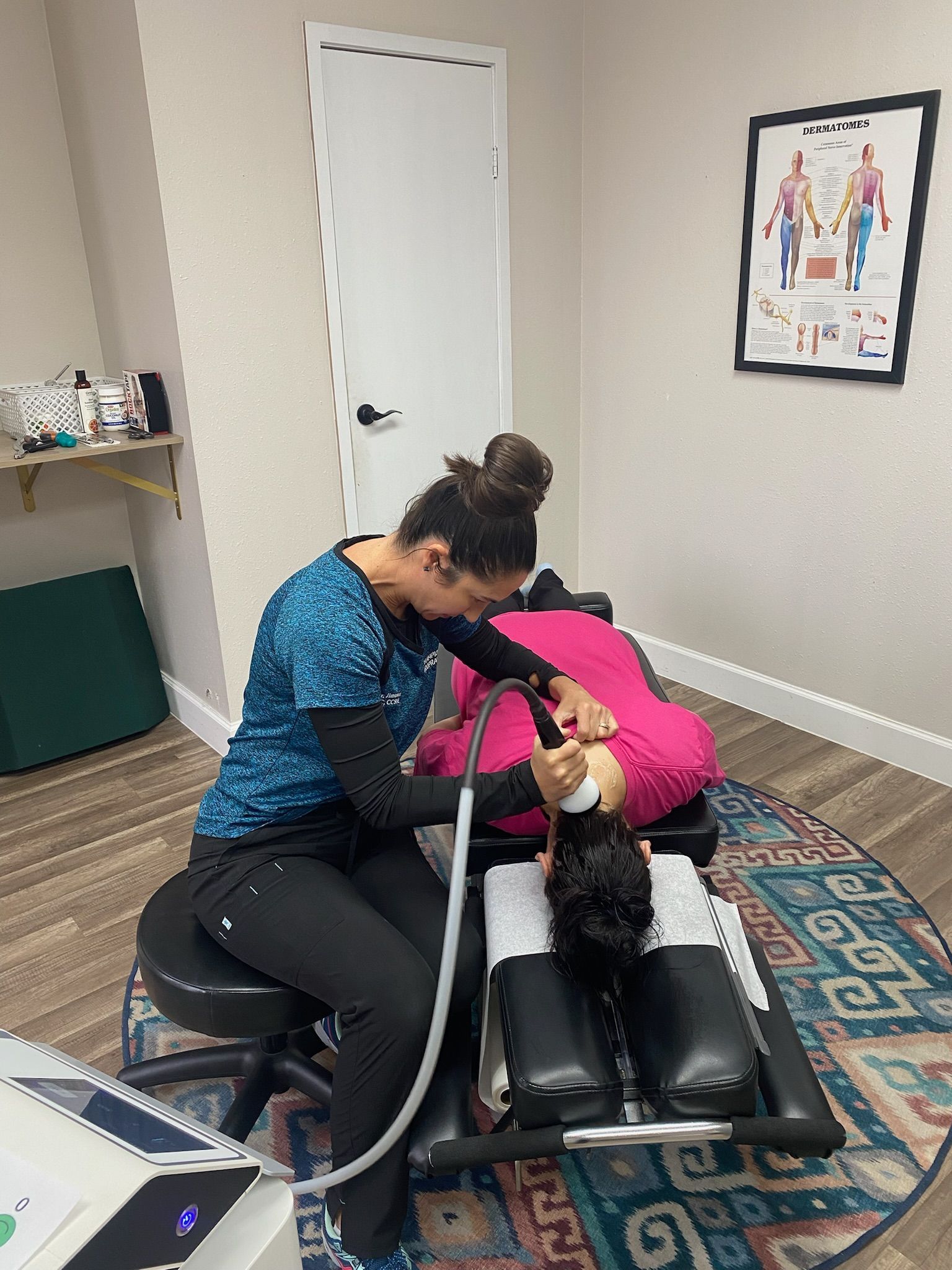
A typical care plan may include chiropractic adjustments, soft tissue work, and practical at-home recommendations. If your stress is showing up as headaches, we pay close attention to the upper cervical spine and muscle tone around the neck and shoulders. If it is low back tension, we evaluate the hips and mid-back as well, because stiffness rarely stays in one place.
Here is how we usually structure the early stages of care:
1. Evaluation and exam to identify movement restrictions and possible nerve irritation
2. A first phase focused on reducing pain, improving motion, and calming muscle guarding
3. Reassessment to measure progress in mobility, symptoms, and day-to-day comfort
4. A stabilization phase where we reinforce better patterns with exercises and habits
5. Maintenance visits if needed to prevent stress patterns from building back up
This is not about “cracking backs.” It is about restoring function so your body is not constantly fighting itself.
Soft Tissue Therapy, Massage, and Releasing the Body’s “Armor”
Spinal adjustments do a lot, but stress often lives in soft tissue as much as it does in joints. Tight muscles can limit motion, change posture, and keep the nervous system feeling threatened. That is why we often incorporate soft tissue therapy and therapeutic massage techniques as appropriate.
When we work on muscle tension, we are not just trying to make you feel looser for an hour. We are trying to change the input your nervous system is receiving. Better tissue mobility can reduce trigger points, improve circulation, and make adjustments hold more comfortably.
Patients commonly notice benefits such as fewer headaches, less shoulder tightness, improved range of motion, and a sense of physical calm. And yes, sometimes you realize you were holding your breath all day without noticing. That happens more than you would think.
Sleep, Energy, and Mental Clarity: The “Hidden” Benefits Patients Notice
Stress and sleep are tightly linked. Poor sleep increases pain sensitivity and muscle tension. Pain and tension make sleep worse. It becomes a loop that is hard to break with willpower alone.
Chiropractic care helps by improving mechanics and reducing the physical barriers to rest, like neck tightness, back stiffness, and nerve irritation. When your body is more comfortable, your sleep has a better chance of becoming deeper and more restorative.
Many people also report more stable daytime energy and better focus. That does not mean life stops being busy. It means your body is not spending all day in compensation mode. When movement is easier and pain is quieter, your brain often feels less foggy, too.
At-Home Strategies We Recommend Between Visits
What you do between visits matters, especially when stress is a daily factor. We keep recommendations simple and realistic, because a perfect routine you never do is not helpful.
Depending on your case, we may recommend:
- Gentle neck and upper back mobility drills to reduce stiffness from desk work
- Breathing exercises that encourage rib mobility and calm the nervous system
- Stretching for hips and hamstrings to reduce low back strain
- Light strengthening for posture support, especially mid-back and core stability
- Workstation or driving posture tweaks to reduce repetitive strain
You do not need to overhaul your lifestyle overnight. A few consistent changes can keep your nervous system from sliding back into that tight, guarded pattern.
How Often Should You See a Chiropractor for Stress and Tension?
The honest answer is: it depends on how long the pattern has been present and how much stress load your body is carrying right now. Acute flare-ups may need closer spacing at first, while long-standing tension often improves through phases: relief, stabilization, and prevention.
Maintenance care is not about dependency. It is about keeping your spine moving well and preventing stress tension from stacking up again. In Pasadena, where repetitive work and long commutes are common, regular care can be a practical way to protect mobility and reduce flare-ups.
If you are unsure what schedule is right, we talk it through with you and base it on progress, not guesswork. Our goal is always to help you build momentum and keep it.
Take the Next Step
If you are ready to address stress where it lives in your body, our team at Champion Chiropractic of Pasadena is here to help you create a plan that makes sense for your schedule, your work demands, and your goals. We focus on restoring spinal function, reducing tension, and helping your nervous system shift out of constant high alert.
When you work with Champion Chiropractic of Pasadena, you are not just booking a visit with a Chiropractor in Pasadena TX. You are getting a care approach built around real mechanics, real recovery, and the kind of steady progress that makes daily life feel lighter.
Boost your energy and maintain peak performance with a care plan from Champion Chiropractic of Pasadena.