

The faster we find and treat hidden injury patterns after a crash, the better your odds of avoiding months of stubborn pain.
Car accidents in Pasadena can feel deceptively simple at first: the cars get towed, the paperwork starts, and you go home trying to shake it off. Then a day or two later your neck feels tight, your mid back starts to ache when you sit, and headaches creep in. As a Chiropractor, we see this pattern constantly, especially after rear-end collisions.
What makes auto injuries tricky is that your body can be running on adrenaline for hours or even days. Symptoms like whiplash stiffness, shoulder pain, or tingling down an arm might not fully show up until the inflammation settles in. Our job is to identify what the crash changed in your joints, muscles, and movement, then build a plan that helps you heal efficiently and safely.
In Pasadena TX, heavy traffic near Beltway 8 and the major highway corridors means sudden stops are common, and so are the rapid back-and-forth forces that strain the neck and upper back. When you get checked early, we can often reduce the chance that a short-term injury becomes a long-term issue that keeps resurfacing.
Why car accident injuries often feel worse later
Adrenaline hides pain and movement loss
Right after a collision, your nervous system is in protect mode. That surge can mask pain signals, even when tissues are irritated or joints are not moving correctly. You might feel fine at the scene, only to wake up the next morning feeling like you slept on concrete.
We take delayed symptoms seriously because they are common. A small movement restriction in the cervical spine can set off headaches, jaw tension, and “pulling” sensations between the shoulder blades. If we catch that early, we can usually calm the pattern down faster.
Whiplash is more than a sore neck
Whiplash is a rapid acceleration-deceleration injury. It can involve joints, discs, ligaments, and the small stabilizing muscles that keep your head balanced. When those structures get irritated, your body compensates by tightening surrounding muscles, which can reduce range of motion and make daily activities feel strangely difficult.
Research frequently cited in chiropractic discussions shows meaningful benefits when care begins promptly. One widely shared statistic: about 38 percent of patients who start care immediately report no pain at six months, compared with about 5 percent who delay. That gap is one reason we encourage you not to wait for symptoms to “prove” something is wrong.
How chiropractic care supports faster recovery after a crash
Restoring alignment and motion without invasive procedures
A core goal of chiropractic is to restore normal joint mechanics. After an accident, segments of your spine can become restricted or irritated, and that can amplify muscle guarding. With careful adjustments, we work to improve motion, reduce pain signals, and help your body move more naturally again.
If you are dealing with whiplash, we keep things gentle and specific. The right technique depends on your exam findings, your comfort, and how acute the injury is. We never treat auto injuries with a one-size-fits-all approach.
Reducing muscle spasm and soft tissue strain
Many crash injuries are soft tissue-driven. Muscles and fascia can develop trigger points, inflammation, and protective tightness. That tightness may feel like “pressure,” burning, or a deep ache that does not respond well to rest alone.
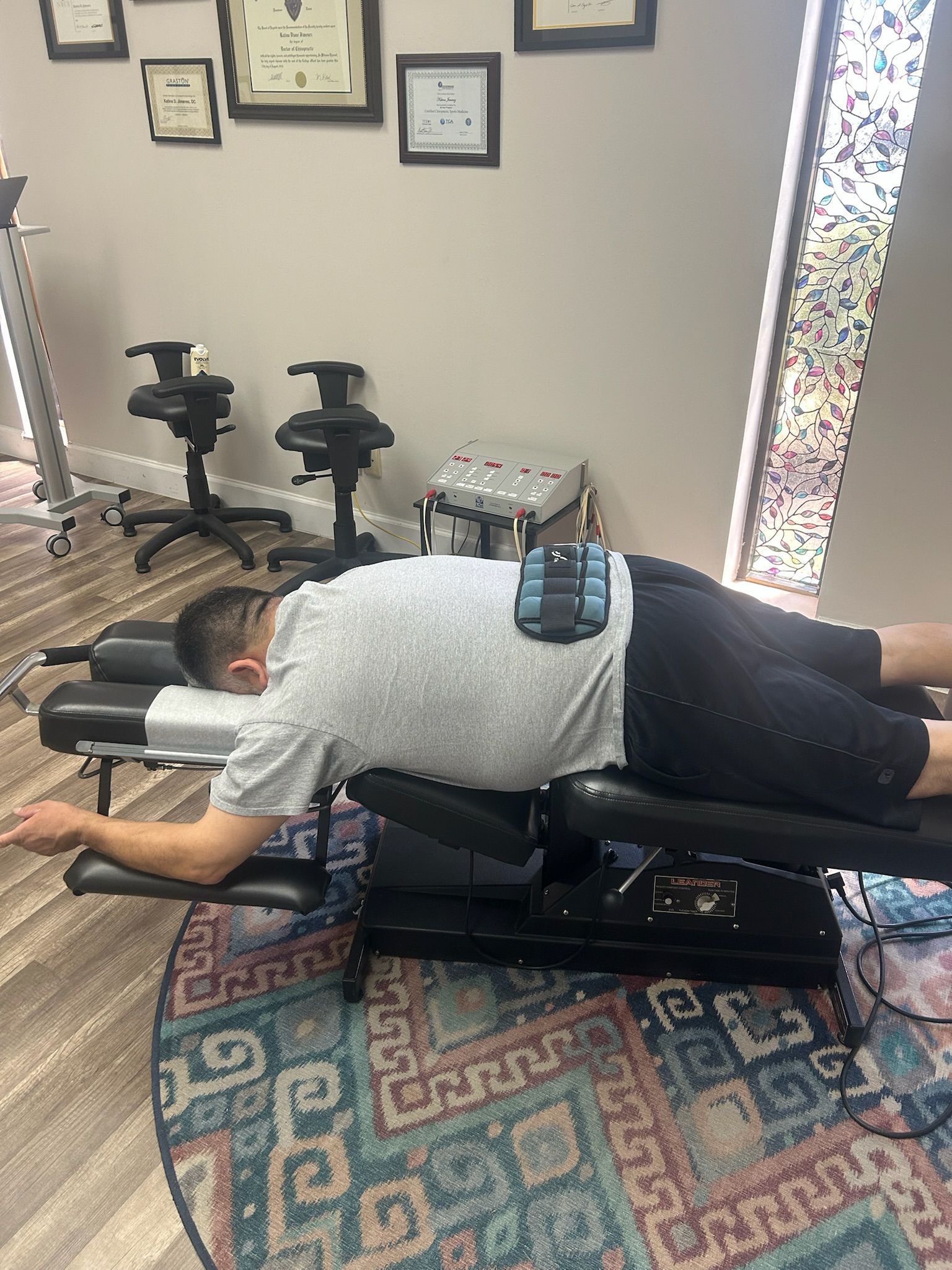
Depending on your needs, we may incorporate soft tissue therapies and muscle stimulation to reduce spasm and improve circulation. When muscles stop bracing, joints often move better, and rehab becomes more productive.
Rehab turns short-term relief into lasting recovery
Adjustments can create breathing room for healing, but rehab is what helps your body keep the gains. We commonly integrate physical rehabilitation strategies so you can rebuild stability, posture, and coordination after the crash.
That can be as simple as targeted home exercises to restore neck mobility, strengthen the mid-back, or retrain deep core control. Done consistently, home rehab is a big reason many patients report significant improvement, including studies that cite benefits in the 85 percent range for symptom relief and functional gains with chiropractic-focused care plans.
What we look for in an auto injury exam
A clear baseline, not just a pain score
Pain matters, but we also want to know what you cannot do comfortably: turning your head while driving, sitting through a work shift, lifting a child, sleeping on your side. We assess posture, range of motion, orthopedic indicators, and how your muscles respond to movement.
Your baseline guides the care plan. It also helps document progress over time, which is useful for you and, when appropriate, for the paperwork that often follows an accident.
When imaging or referrals are appropriate
Not every crash requires imaging, but some situations do. If we see red flags or your symptoms suggest disc involvement or more complex injury, we can coordinate referrals for diagnostics such as MRI through the appropriate channels. The point is simple: we want clarity before we push the body.
A responsible Chiropractor in Pasadena TX knows when to treat, when to modify, and when to escalate evaluation.
A practical timeline: what recovery often looks like
The first week: calm inflammation and protect motion
In the early phase, the goal is to reduce pain and stop the cycle of guarding. We focus on gentle care, supportive therapies, and guidance you can use at home. You may notice you can turn your head a little farther, headaches ease, or the “tight band” feeling across your shoulders starts to loosen.
Weeks two to six: rebuild stability and normal movement
This is usually when rehab becomes more active. We progress exercises and work on restoring mechanics so you are not stuck in compensation. Many people begin to feel more like themselves here, but it is also the phase where overdoing it can cause flare-ups, so pacing matters.
Beyond six weeks: prevent chronic patterns
If symptoms linger, it is often because the body adopted a new movement strategy. We continue to address the underlying restrictions and support strength and endurance. The goal is to help you return to work, sports, and daily life without constantly thinking about your neck or back.
Treatments we may include in your plan
Chiropractic care after a car accident is rarely just one technique. Based on your exam, we may combine methods to help you heal efficiently:
• Spinal adjustments designed to restore joint motion and reduce irritation in the neck, mid-back, and low back
• Soft tissue therapy to address muscle tightness, trigger points, and protective guarding after impact
• Muscle stimulation or similar modalities to support circulation, reduce spasm, and improve comfort between visits
• Active Release Therapy and related approaches when scar tissue or fascial restriction is limiting movement
• Therapeutic exercises and at-home rehab so your progress holds outside the clinic
• Supportive options such as ultrasound, cold laser, and nutritional guidance when inflammation and tissue recovery need extra attention
We choose tools based on your presentation, not trends. Some people need more soft tissue focus, others need more stabilization, and many need both.
When should you see a chiropractor after a car accident?
Sooner is better, even if symptoms seem mild. Waiting can allow inflammation, compensation, and stiffness to become your new normal. It is also common for people to feel “fine” for a week and then suddenly struggle with sleep, headaches, or pain when they look over their shoulder.
If you want a practical rule: if your car was hit hard enough to jolt you, it was hard enough to justify an exam. Early evaluation does not lock you into weeks of care. It simply gives you information and a plan based on what your body is actually doing.
What to bring to your first visit
To make your intake smooth, we recommend bringing a few basics. It saves time and helps us build a clearer clinical picture:
1. The date of the accident and a brief description of the impact direction, including any head rotation at the moment of impact
2. Your insurance information and any claim details you already have, if applicable
3. A list of symptoms, even the “small” ones like dizziness, jaw tension, or tingling
4. Any prior imaging or relevant medical notes you were given after the crash
5. A quick summary of your work demands and daily activities that are currently limited
We will still take a full history, but these details help us start with less guesswork.
Safety and comfort: what you can expect from our approach
People sometimes worry chiropractic care will be too aggressive after a collision. In our office, safety comes first, and we tailor techniques to your injury stage and tolerance. If something does not feel right, we adjust the plan. That is not a failure, it is normal clinical decision-making.
We also keep the conversation practical. If your job requires lifting or long hours in a vehicle, we want to know so we can build strategies that fit your reality. Healing is not just what happens in the treatment room. It is also how you move at your desk, how you sleep, and whether your home exercises match what your body can handle.
Take the Next Step
Getting back to normal after a crash usually takes a mix of the right timing, the right treatment, and a plan you can actually follow when life gets busy. At Champion Chiropractic of Pasadena, we focus on identifying the specific injuries that follow car accidents and building a care path that supports faster recovery, better movement, and fewer lingering symptoms.
If you are searching for a Chiropractor who understands auto injury patterns in Pasadena TX, we are ready to guide you through the next steps with a clear exam, straightforward recommendations, and rehab that fits your day-to-day life at Champion Chiropractic of Pasadena.
Ready to feel your best? Book an appointment at Champion Chiropractic of Pasadena today.